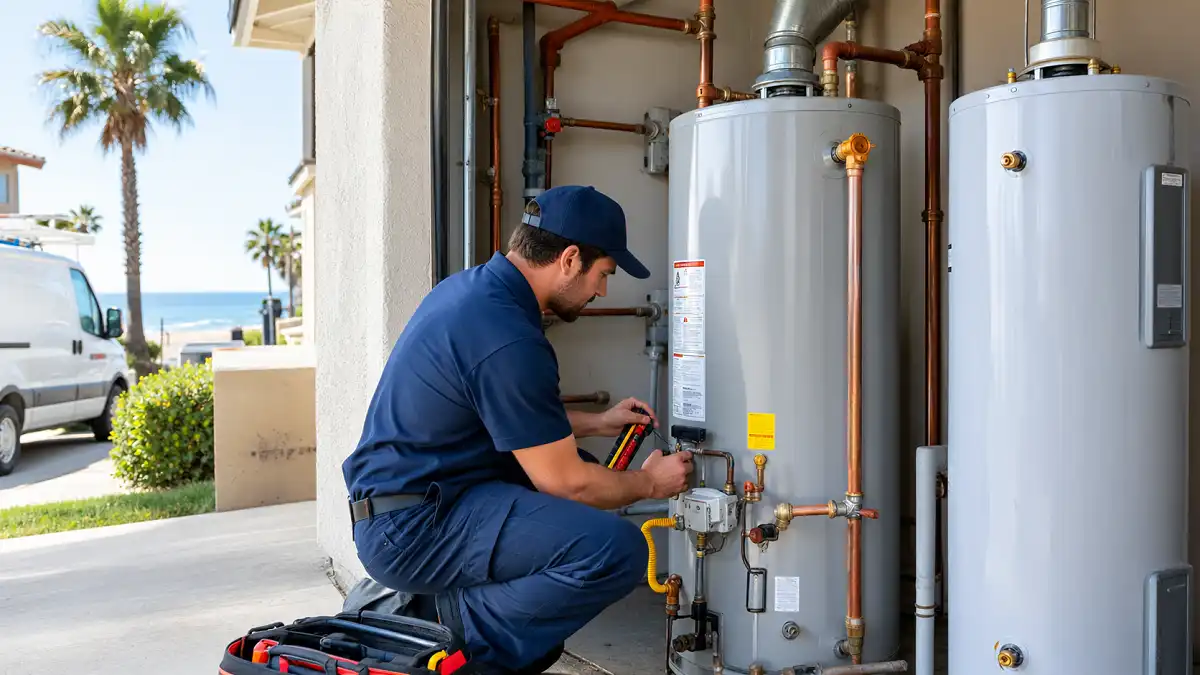
What Hot Water Heater Replacement & Repair in Imperial Beach Really Involves
A cold shower is annoying. A failed tank dumping 50 gallons of hot water into your garage is far worse. For coastal homeowners, hot water heater replacement & repair in Imperial Beach comes down to one question: can you spot the problem before it becomes water damage? This article covers warning signs, repair vs. replace math, California code rules, costs, and maintenance steps. We’ve written it the way we explain things to customers: plain language, real numbers, and no sales fluff.
Key Takeaways
- Age matters most. A tank water heater past 10 years with a leak should almost always be replaced, not repaired.
- California code is strict. Every install needs seismic strapping, a properly piped TPR valve, and usually a permit and expansion tank.
- Salt air and hard water shorten lifespan. Coastal homes need annual flushing and anode rod checks to reach full service life.
Why Coastal Water Heaters Fail Faster
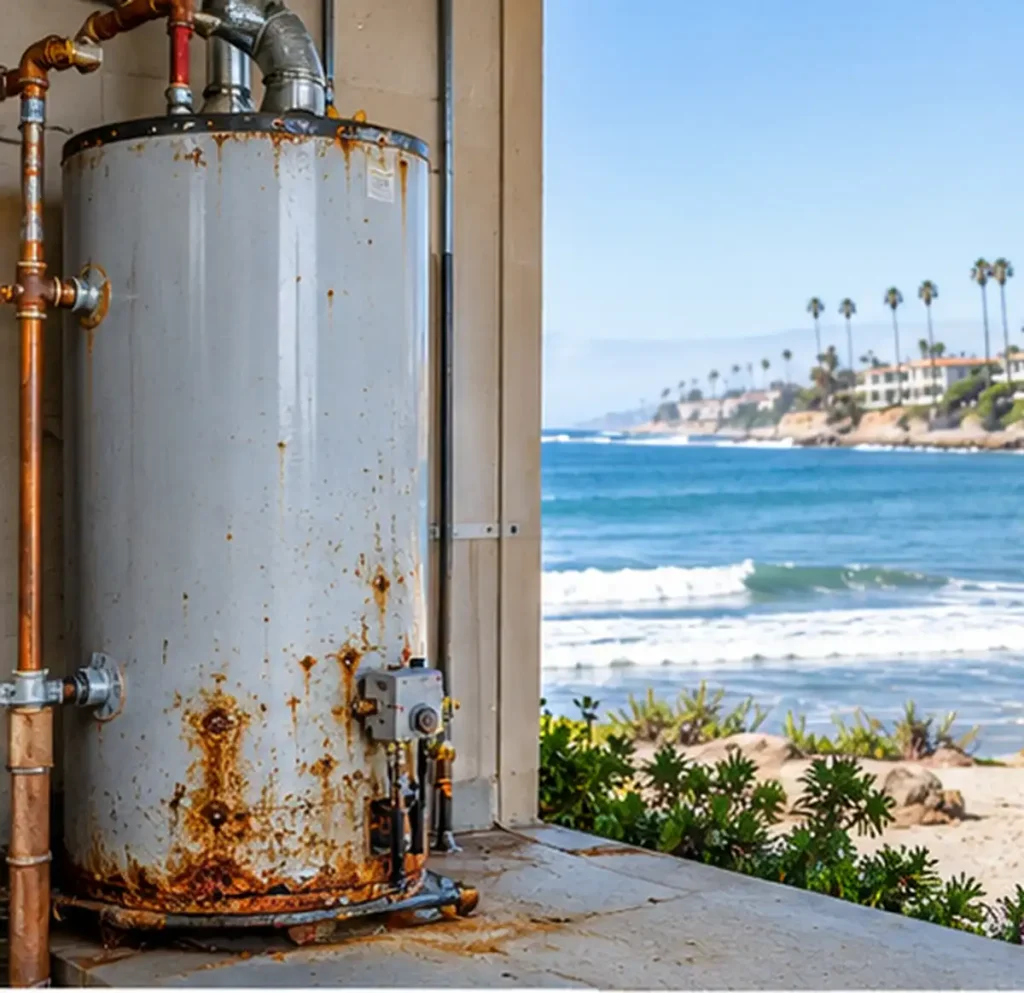
At Bob’s Emergency Plumbing, we work on the Jersey Shore, where salt air eats metal just like it does in Imperial Beach. The corrosion patterns are nearly identical. Burner assemblies, vent connectors, and gas valves rust from the outside in. Meanwhile, hard water attacks the tank from the inside.
Imperial Beach draws on imported water that runs hard. That means mineral sediment builds up fast at the bottom of the tank. Sediment is the silent killer of tank water heaters. It insulates the burner from the water, overheats the steel, and cracks the glass lining.
Our plumbers frequently see this in older NJ beach homes, and the fix is the same on both coasts. Regular water heater repair and installation by a licensed pro catches these issues early, well before a tank lets go.
| Coastal Stress Factor | What It Damages | Typical Result |
|---|---|---|
| Salt air | Burner, vent, gas valve, jacket | Pilot outages, rusted vents, CO risk |
| Hard water | Tank bottom, elements, tankless heat exchanger | Rumbling, lost capacity, early leaks |
| Garage installs | Exposure to damp, sea-level humidity | Faster exterior corrosion |
| High water pressure | Tank welds, TPR valve | Dripping relief valve, seam leaks |
Warning Signs Your Water Heater Needs Repair or Replacement
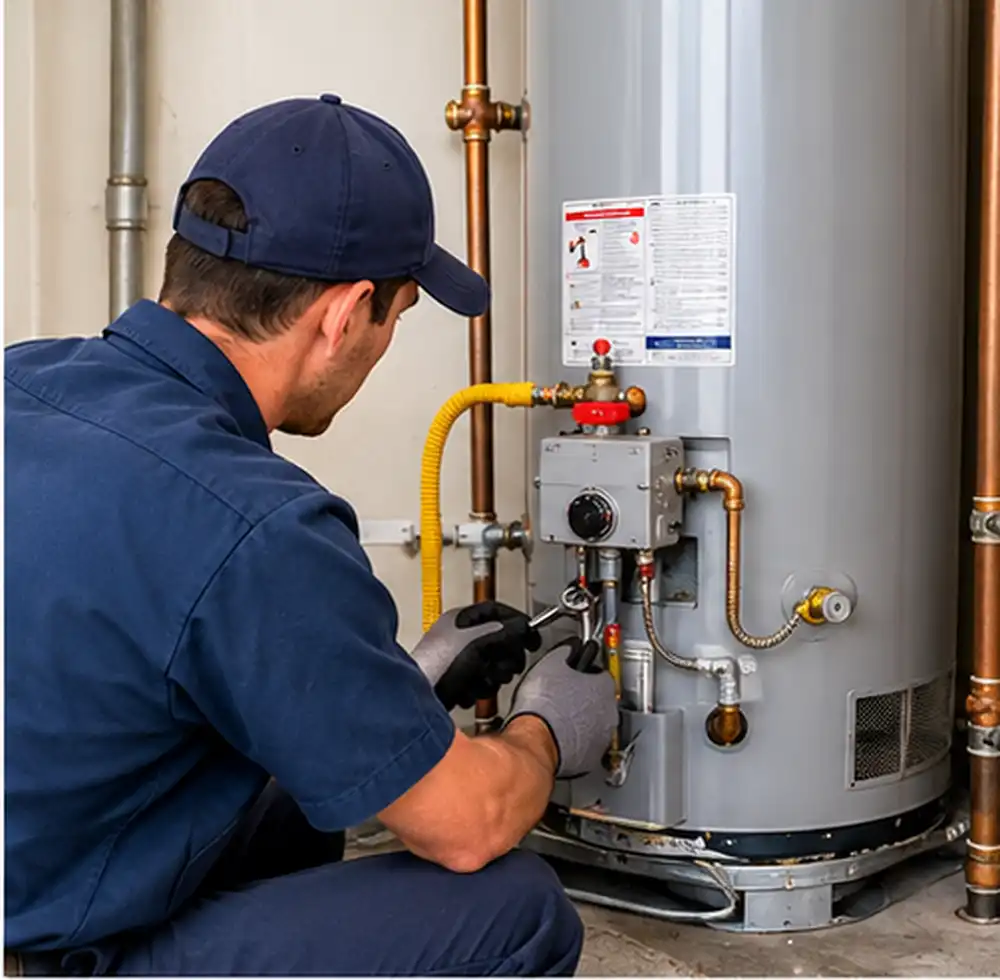
Most water heaters give warning signs weeks or months before they fail. The trick is knowing which ones point to a cheap repair and which ones mean replacement. On recent emergency calls in New Jersey, nearly every flooded basement we saw had ignored at least two of these signs.
Signs That Usually Mean Repair
- No hot water at all on a gas unit (often a thermocouple or pilot problem)
- Lukewarm water on an electric unit (often a failed heating element)
- Dripping TPR valve (often high pressure or a worn valve)
- Pilot light won’t stay lit
- Water that runs out faster than it used to (sediment or a bad dip tube)
Signs That Usually Mean Replacement
- Water pooling under the tank from the tank body itself
- Rusty or brown hot water only (the cold side runs clear)
- Visible rust on the tank seams or base
- Loud popping or rumbling that flushing won’t fix
- Tank age over 10-12 years
A leak from the tank body cannot be patched. Once the inner steel rusts through, the only safe option is a new heater.
| Symptom | Likely Cause | Repair or Replace? |
|---|---|---|
| No hot water (gas) | Thermocouple, pilot, gas valve | Repair |
| No hot water (electric) | Element, thermostat, tripped breaker | Repair |
| Rust-colored hot water | Depleted anode, tank corrosion | Replace if tank is 8+ years |
| Rumbling noise | Sediment buildup | Flush first, replace if it persists |
| Leak at fittings | Loose connection, failed valve | Repair |
| Leak from tank body | Tank rupture | Replace |
| Rotten egg smell | Anode reaction with water | Repair (swap anode) |
| Gas smell | Gas leak | Leave home, call gas utility |
Repair vs. Replace: A Simple Decision Framework
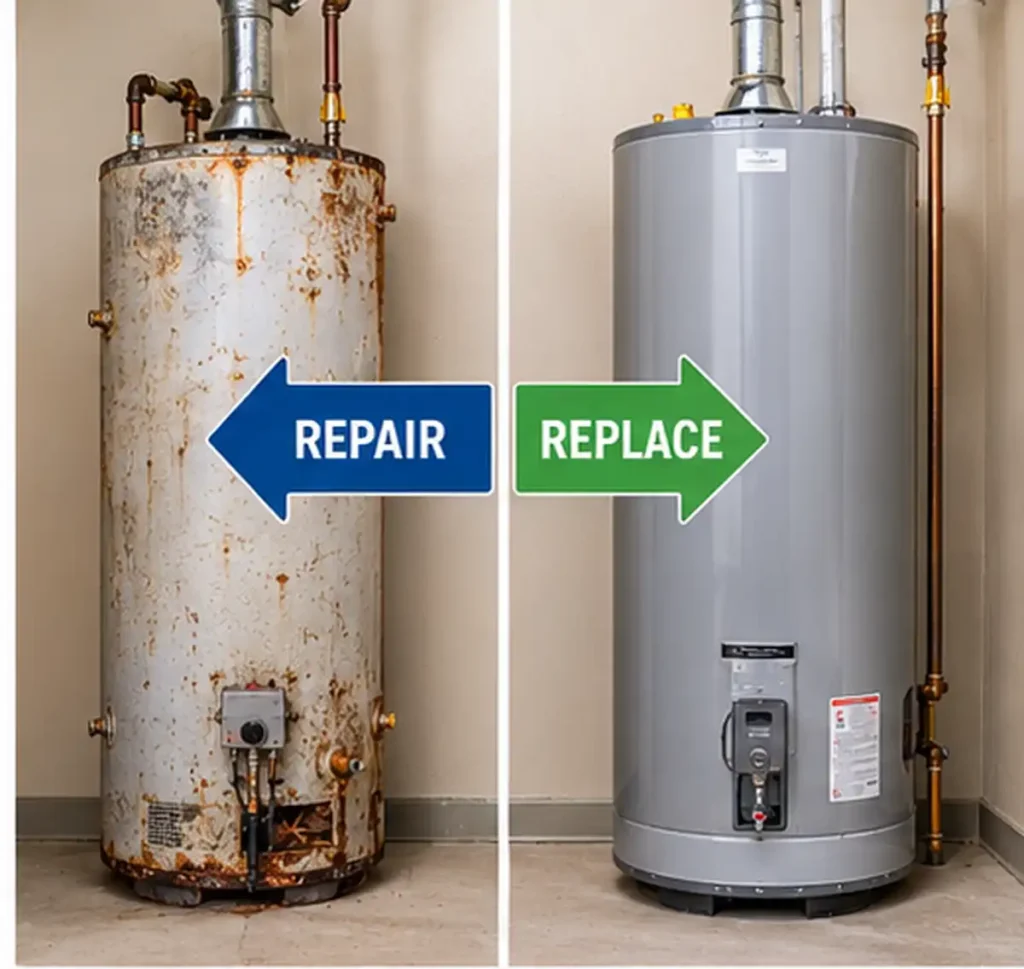
Homeowners always ask us one thing first: “Is it worth fixing?” We use a basic rule. If the repair cost is more than 50% of a new unit, or the tank is past two-thirds of its lifespan, replacement usually wins. The numbers below show how we think it through for hot water heater replacement & repair in Imperial Beach.
| Factor | Lean Toward Repair | Lean Toward Replace |
|---|---|---|
| Tank age | Under 8 years | Over 10 years |
| Tankless age | Under 15 years | Over 18 years |
| Repair cost | Under $500 | Over 50% of a new unit |
| Leak source | Valve, fitting, or pipe | Tank body |
| Repair history | First repair | Third repair in two years |
| Energy bills | Stable | Climbing with no other cause |
| Code status | Already strapped and permitted | Missing straps, bad venting |
| Household size | Unit still meets demand | Family grew, runs out of hot water |
Our Honest Take
- A $250 thermocouple on a 5-year-old tank? Fix it.
- A $700 gas valve on a 12-year-old tank? Put that money toward a new heater.
- Any tank body leak? Replace it now, not next month.
Throwing good money at a dying tank is the most common mistake we see. Transparent advice means sometimes telling you not to spend money on a repair.
Water Heater Types Compared
Picking the right replacement matters as much as the install. Each water heater type has trade-offs in upfront cost, operating cost, and lifespan. For most Imperial Beach homes, the choice comes down to gas tank, tankless, or heat pump.
| Type | Average Lifespan | Upfront Cost | Operating Cost | Best For |
|---|---|---|---|---|
| Gas tank | 8-12 years | Low | Moderate | Budget replacements, existing gas lines |
| Electric tank | 10-15 years | Low | High | Homes without gas |
| Gas tankless | 15-20 years | High | Low | Families, long showers, small spaces |
| Electric tankless | 15-20 years | Moderate | Moderate | Small homes, point-of-use needs |
| Heat pump (hybrid) | 10-15 years | High | Very low | Mild climates like coastal San Diego |
| Condensing gas tank | 10-15 years | Moderate-high | Low | High demand, gas homes |
The mild coastal climate makes heat pump water heaters a strong fit here. They pull heat from the surrounding air, and Imperial Beach air rarely gets cold. That’s a real advantage over our New Jersey winters, where garage heat pumps struggle in January.
California and Imperial Beach Code Requirements
This is where many cheap installs go wrong. California follows the California Plumbing Code (CPC), and the rules for water heaters are specific. Skipping them can cause failed inspections, denied insurance claims, and real safety hazards. Any quote for hot water heater replacement & repair in Imperial Beach should include every item below.
Seismic Strapping
California law requires earthquake bracing on every tank water heater.
- Two straps minimum: one in the upper third and one in the lower third of the tank
- The lower strap must sit at least 4 inches above the controls
- Straps must anchor into wall studs or masonry, not drywall
- Flexible connectors on water and gas lines help the tank survive a shake
TPR Valve and Discharge Line
The temperature and pressure relief (TPR) valve stops a tank from exploding.
- Must be factory-installed or rated for the heater
- Discharge pipe must be full size with no reductions
- Pipe must run downhill and end in an approved location, typically 6 to 24 inches above grade outdoors
- No valves, caps, or threads on the discharge end
Expansion Tank
- Required on closed systems, which includes most homes with a pressure regulator or check valve
- Absorbs the thermal expansion of heated water
- Protects the TPR valve, tank welds, and fixtures
Permits and Inspection
- The City of Imperial Beach requires a permit for water heater replacement
- An inspector checks strapping, venting, gas connections, and TPR piping
- Permits protect you at home sale and during insurance claims
Other Common Requirements
| Requirement | Why It Matters |
|---|---|
| Drain pan (where leaks could cause damage) | Catches slow leaks before they spread |
| Sediment trap on gas line | Keeps debris out of the gas valve |
| 18-inch elevation in garages (gas units) | Reduces ignition risk from fuel vapors |
| Proper venting and clearances | Prevents carbon monoxide buildup |
| Combustion air supply | Keeps burners firing cleanly |
| Energy code compliance | Newer California energy code editions favor heat pump options |
If a contractor says “we don’t need a permit for that,” consider it a red flag. Unpermitted installs often skip the exact steps that keep your family safe.
Cost Breakdown for Imperial Beach

Pricing in coastal San Diego County runs higher than the national average. Labor rates, permit fees, and code upgrades all add up. The ranges below reflect typical 2026 market pricing for hot water heater replacement & repair in Imperial Beach. Your actual quote depends on access, venting, and what the old install is missing.
Common Repair Costs
| Repair | Typical Cost Range | Time on Site |
|---|---|---|
| Tank flush and inspection | $120-$250 | 1 hour |
| Thermocouple or flame sensor | $150-$350 | 1 hour |
| Heating element (electric) | $200-$400 | 1-2 hours |
| Thermostat (electric) | $200-$400 | 1-2 hours |
| Anode rod replacement | $250-$450 | 1-2 hours |
| TPR valve replacement | $200-$400 | 1 hour |
| Gas control valve | $400-$800 | 2 hours |
| Tankless descaling | $175-$350 | 1-2 hours |
| Emergency after-hours fee | $100-$300 extra | Varies |
Replacement Costs (Installed)
| Water Heater Type | Typical Installed Cost |
|---|---|
| 40-50 gallon gas tank | $1,800-$3,200 |
| 40-50 gallon electric tank | $1,500-$2,800 |
| Gas tankless | $3,500-$6,500 |
| Electric tankless | $2,000-$4,500 |
| Heat pump (hybrid) | $3,500-$6,000 before rebates |
| Condensing gas tank | $3,000-$5,000 |
Add-Ons That Change the Price
| Add-On | Typical Cost |
|---|---|
| Permit | $100-$300 |
| Expansion tank | $150-$350 |
| Seismic strap kit | $50-$150 |
| New venting (tankless conversion) | $500-$1,500 |
| Gas line upsizing (tankless) | $500-$2,000 |
| Electrical circuit (heat pump or electric tankless) | $500-$2,500 |
| Haul-away of old unit | $50-$150 |
Rebates can cut the cost of heat pump and high-efficiency models. Check your local utility and the federal tax credit rules before you buy. A higher sticker price sometimes costs less after incentives.
Energy Efficiency Ratings Explained
Water heaters are rated by Uniform Energy Factor (UEF). A higher UEF means less energy wasted. Water heating is one of the largest energy costs in a typical home, so this number matters over a 10- to 20-year lifespan.
| Water Heater Type | Typical UEF Range | Relative Yearly Operating Cost |
|---|---|---|
| Standard gas tank | 0.58-0.70 | Moderate |
| Condensing gas tank | 0.80-0.90 | Low-moderate |
| Electric resistance tank | 0.92-0.95 | High (electricity costs more than gas) |
| Gas tankless | 0.81-0.97 | Low |
| Electric tankless | 0.96-0.99 | Moderate |
| Heat pump (hybrid) | 3.3-4.0+ | Lowest |
Note that electric tanks have high UEF numbers but still cost more to run, because electricity rates in California are steep. Heat pumps win because they move heat instead of creating it.
Saving hot water saves energy too. Pairing a new heater with low-flow fixtures multiplies the benefit. According to the water conservation guidance from EPA WaterSense, labeled showerheads and faucets reduce water use without sacrificing performance. Less hot water down the drain means less energy spent heating it.
Tankless vs. Tank: Pros and Cons
This is the biggest decision most homeowners face during replacement. Both options work well in the right home. Here’s how we explain the trade-offs on every estimate.
Tank Water Heater
Pros
- Lower upfront cost
- Simple, fast replacement (often same day)
- Works during power outages (standard gas models)
- Easy for any licensed plumber to service
Cons
- Shorter lifespan (8-12 years)
- Standby heat loss around the clock
- Can run out of hot water
- Takes up floor space
- Flood risk when the tank fails
Tankless Water Heater
Pros
- Endless hot water at the right flow rate
- Longer lifespan (15-20 years)
- Wall-mounted, saving garage space
- No tank to rupture
- Lower operating cost
Cons
- Higher upfront cost
- May need gas line and venting upgrades
- Needs annual descaling in hard water
- Slight delay before hot water arrives
- Won’t run during power outages
| Factor | Tank | Tankless |
|---|---|---|
| Upfront cost | $ | $$$ |
| Lifespan | 8-12 years | 15-20 years |
| Hot water supply | Limited by tank size | Continuous |
| Space needed | Floor | Wall |
| Maintenance | Yearly flush | Yearly descale |
| Flood risk | Higher | Lower |
For a family of four or more, tankless usually pays back over its lifespan. For a single person or a rental, a quality tank often makes more sense.
Step-by-Step Troubleshooting Checklist
Before you call for hot water heater replacement & repair in Imperial Beach, a few safe checks can save you a service call. Stop immediately if you smell gas or see scorching near the burner. Our emergency dispatchers walk callers through these same steps every week.
Gas Tank Water Heaters
- Check the gas supply. Are other gas appliances working?
- Look at the pilot. Is it lit? Follow the relight steps on the tank label.
- Check the thermostat dial. Someone may have bumped it to “vacation.”
- Inspect the burner area for rust flakes or soot.
- Look for water at the base or around fittings.
- Listen for popping, which signals sediment.
Electric Tank Water Heaters
- Check the breaker. Reset it once. If it trips again, stop.
- Press the reset button (the high-limit switch) under the access panel.
- Confirm thermostat settings (around 120°F is standard).
- Note if water is lukewarm, which often means one element failed.
Tankless Water Heaters
- Read the error code on the display.
- Check the inlet filter for debris.
- Open a faucet fully, since low flow may not trigger ignition.
- Confirm power to the unit.
- Think back to the last descale. Over a year? Scale is likely the cause.
When to Stop and Call a Pro
- Gas smell of any kind
- Water leaking from the tank body
- TPR valve discharging hot water
- Scorch marks or melted wiring
- Breaker trips repeatedly
If water is actively spreading or you can’t shut it off, treat it as an emergency. Fast-response emergency plumbing services can shut down the unit, stop the water, and prevent drywall and flooring damage. Always know where your cold water shutoff is before you need it.
Annual Maintenance Checklist
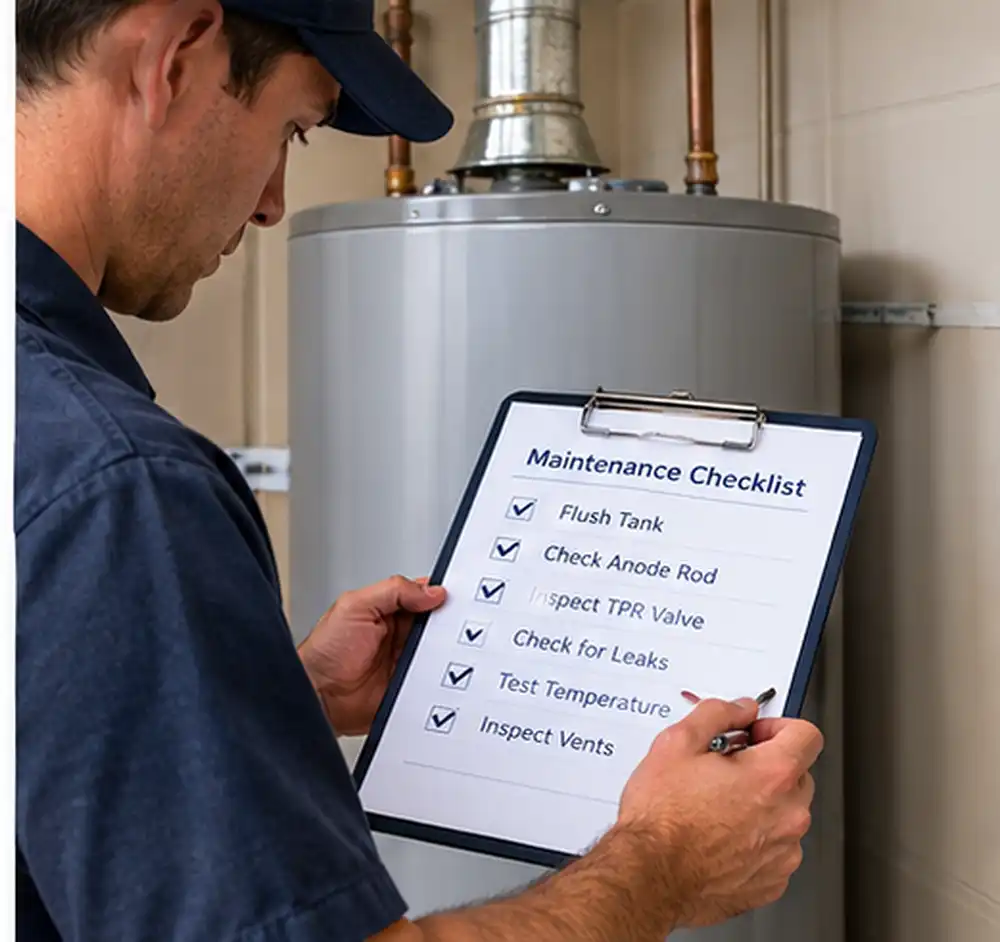
Maintenance is the cheapest way to delay hot water heater replacement & repair in Imperial Beach. A tank that’s flushed yearly can outlast a neglected one by several years. Fifteen minutes a year can protect a $2,500 investment.
Every Month
- Look for moisture around the base
- Listen for new noises
- Check the area for stored items blocking airflow
Every 6 Months
- Test the TPR valve by lifting the lever briefly (have a bucket ready)
- Inspect seismic straps for rust or looseness
- Check the vent for rust, gaps, or bird nests
Every Year
- Flush the tank to remove sediment
- Descale tankless units with a vinegar or descaling solution
- Inspect the anode rod (replace if under half an inch thick or coated in calcium)
- Check the expansion tank pressure
- Clean the tankless inlet filter
- Confirm thermostat is at about 120°F
Coastal Extras
- Wipe down exterior metal to slow salt corrosion
- Inspect burner assemblies for rust flakes
- Consider a water softener if scale returns quickly
| Task | DIY-Friendly? | Pro Recommended? |
|---|---|---|
| Visual leak check | Yes | No |
| TPR valve test | Yes | If valve won’t reseat |
| Tank flush | Yes, with care | Yes, if valves are old |
| Anode rod swap | Difficult | Yes |
| Tankless descale | Moderate | Yes |
| Gas valve or venting work | No | Always |
Hidden Leaks: The Damage You Don’t See
Not every water heater leak is obvious. Slow drips from fittings, supply lines, or a weeping TPR line can soak subfloors for months. In garages built on slabs, water can travel under walls before anyone notices. Our plumbers frequently find mold and rotted framing behind heaters that “never leaked.”
Watch for these clues:
- Water bill creeping up with no change in use
- Musty smell in the garage or utility closet
- Warm spots on the floor near the heater
- Stained baseboards or bubbling paint
Professional leak detection services use thermal imaging and acoustic tools to find hidden water without tearing out walls. Finding a leak early often costs less than one day of water damage cleanup.
FAQs
How long does a water heater last in Imperial Beach?
Most tank units last 8-12 years. Tankless models last 15-20 years. Hard water and salt air can shorten both without regular maintenance.
How long does replacement take?
A like-for-like tank swap usually takes 2-4 hours. A tankless conversion can take a full day, especially with gas line or venting upgrades.
Do I need a permit to replace a water heater?
Yes. California and the City of Imperial Beach require a permit and inspection for water heater replacement. This protects you during home sales and insurance claims.
Why is my TPR valve dripping?
Usually high water pressure or a missing expansion tank. Sometimes the valve is simply worn. Never cap or plug a TPR valve.
What temperature should my water heater be set to?
About 120°F balances safety, energy savings, and comfort. Higher settings raise scald risk.
Is a heat pump water heater worth it on the coast?
Often yes. The mild coastal climate keeps heat pumps running efficiently year-round, and rebates can offset the higher price.
Why does my hot water smell like rotten eggs?
A reaction between the anode rod and bacteria in the water. Swapping to an aluminum-zinc or powered anode usually fixes it.
Can I install a water heater myself?
We don’t recommend it. Gas connections, venting, seismic strapping, and permits all require licensed expertise. Mistakes can cause carbon monoxide exposure or fire.
How do I choose the right size?
For tanks, match gallons to household size (roughly 40 gallons for 2-3 people, 50 gallons for 3-5). For tankless, size by peak flow rate in gallons per minute.
In Closing
Water heaters rarely fail without warning. Age, leaks, rust, and noise tell you what’s coming. The smartest approach to hot water heater replacement & repair in Imperial Beach is simple: maintain your unit yearly, repair it when it’s young, and replace it before the tank body gives out. Insist on full code compliance, including strapping, TPR piping, an expansion tank, and a permit.
At Bob’s Emergency Plumbing, we’ve spent years on coastal homes where salt air and hard water push equipment to its limits. The lesson holds on any coast: small maintenance beats big emergencies. Your next step is easy. Check your heater’s age on the label today, and if it’s past 10 years, start planning your replacement before it plans itself.