
A slow drain is rarely just a slow drain. It is usually the first sign of grease, mineral scale, and debris narrowing your pipes from the inside. Hydro jetting Chula Vista property owners rely on uses pressurized water at roughly 3,000 PSI to scour that buildup off the full pipe wall instead of poking a small hole through the clog. Why does that matter? It decides whether you pay once for a clean line or keep paying for repeat backups, sewage odors, and water damage repairs.
Key Takeaways
- Hydro jetting cleans the entire pipe wall, while snaking only opens a channel through the clog. That is why jetted lines stay clear longer.
- Multiple slow drains, gurgling, or backups in low fixtures point to a main line problem. These signs call for a camera inspection and a professional, not a store-bought chemical.
- Most drain cleaning visits run $150–$500, with hydro jetting at the higher end. Preventive jetting costs far less than emergency sewer repair or water damage cleanup.
What Is Hydro Jetting?
Hydro jetting is a drain cleaning method that sends high-pressure water through a specialized hose and nozzle to strip buildup from the inside of a pipe. The nozzle has rear-facing jets that pull it forward and forward jets that break up blockages. The result is a pipe that is cleaned, not just unclogged.
Our plumbers frequently see this buildup in older NJ homes, where decades of kitchen grease, soap scum, and hard water scale coat cast iron lines. The same patterns appear in coastal Southern California neighborhoods with aging sewer laterals and heavy kitchen use. When people search for hydro jetting Chula Vista services, they are usually dealing with a clog that keeps coming back.
At Bob’s Emergency Plumbing, we treat jetting as one tool inside our full range of drain cleaning services. Not every clog needs it. Recurring clogs, grease-heavy lines, and root intrusion almost always do.
Check Also: Plumbing Stevens Point: What Central Wisconsin Winters Mean for Your Pipes
How the Hydro Jetting Process Works
The process follows a set order. Each step depends on the one before it.
- Inspect the line. A technician runs a sewer camera through the cleanout to find the clog, check pipe condition, and spot cracks or offsets.
- Choose the nozzle and pressure. Pressure is matched to the pipe material, diameter, and age, not set to a default.
- Insert the hose at the cleanout. The cleanout (a capped access pipe outside or in the basement) gives direct entry to the main line.
- Scour the pipe walls. The nozzle travels the length of the line, cutting through grease, scale, and roots.
- Flush debris downstream. Loosened material washes out to the municipal sewer.
- Verify with a second camera pass. We confirm the pipe is clean and check for damage the clog was hiding.
- Recommend a maintenance plan. You get a realistic schedule based on your line’s history and usage.
The key step is number four. A snake treats the clog. A jetter treats the whole pipe, which removes the material that would have caused the next clog.
Hydro Jetting vs. Snaking vs. Chemical Cleaners
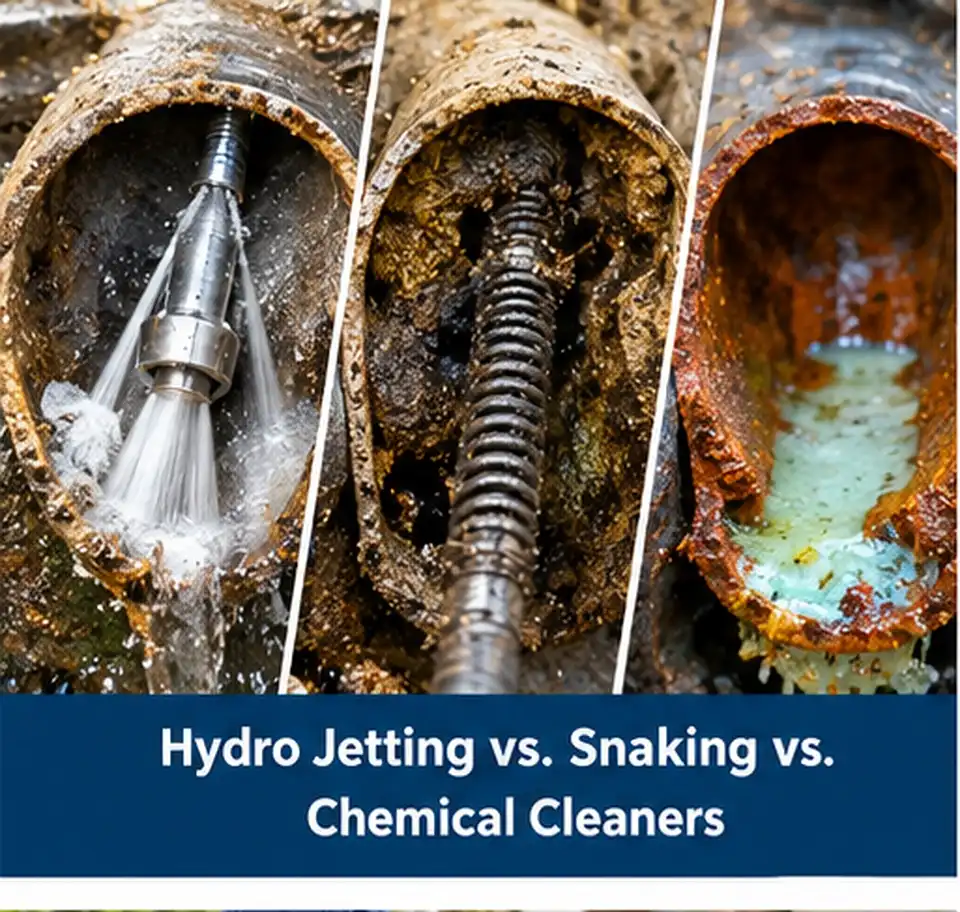
These three methods solve different problems. Snaking (using a rotating cable called an auger) opens a path through a blockage. Chemical cleaners dissolve some organic material near the fixture. Hydro jetting restores the pipe’s full inside diameter.
| Feature | Hydro Jetting | Drain Snaking (Auger) | Chemical Drain Cleaners |
|---|---|---|---|
| How it works | Water at ~3,000 PSI scours pipe walls | Rotating cable bores through clog | Caustic or acidic chemicals dissolve organic matter |
| Cleans pipe walls | Yes, full circumference | No, opens a narrow channel | Partially, near the fixture only |
| Removes tree roots | Yes, with root-cutting nozzles | Cuts some, roots regrow fast | No |
| Handles grease buildup | Excellent | Poor, grease smears and resets | Poor to fair |
| Reach | Entire main line and laterals | Limited by cable length | A few feet past the drain |
| Results last | Often 1–2 years or more | Weeks to months on chronic clogs | Days to weeks |
| Pipe safety | Safe when pressure is matched to pipe condition | Can scratch older pipes | Can corrode cast iron and galvanized steel |
| Best for | Recurring clogs, grease, roots, main lines | One-time, localized clogs | Not recommended |
The takeaway is simple. Snaking is fine for a single clogged sink. Chronic or main line problems need jetting.
Check Also: Ductless Mini Splits Sussex WI: What Homeowners Must Know
Hydro Jetting Chula Vista Cost Comparison
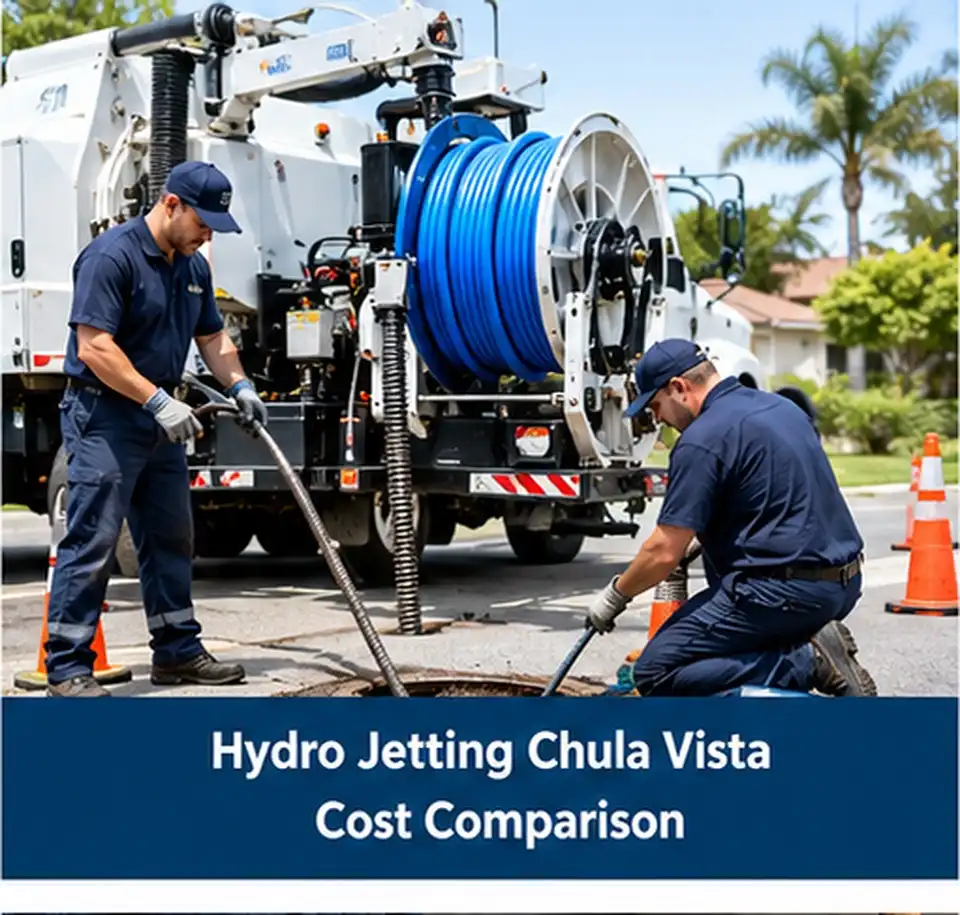
Most drain cleaning visits in the San Diego area run $150–$500. Hydro jetting sits at the higher end because it requires specialized equipment, a camera inspection, and more labor time. The table below shows typical ranges so you can budget before you call.
| Service | Typical Cost Range | What Drives the Price | How Long Results Last |
|---|---|---|---|
| Chemical drain cleaner (DIY) | $10–$40 per bottle | Brand, quantity | Days to weeks |
| Single-fixture snaking | $150–$275 | Fixture location, clog depth | Weeks to months |
| Main line snaking | $200–$400 | Cleanout access, line length | Months |
| Residential hydro jetting | $350–$600+ | Line length, buildup severity, roots | 1–2 years or more |
| Camera inspection (add-on) | $150–$350 | Length of line, recording/report | Diagnostic only |
| Commercial hydro jetting | $500–$1,500+ | Grease load, line size, after-hours timing | Depends on maintenance plan |
| Sewer line repair (after neglect) | $1,500–$7,000+ | Excavation, pipe material, length | Long-term fix |
| Water damage cleanup (after backup) | $1,200–$5,000+ | Square footage, sewage contamination | N/A |
Prices are typical ranges, not quotes. Your actual cost depends on access, pipe condition, and timing. A transparent contractor gives you the price before the work begins.
What Pushes Your Price Up or Down
- Accessible cleanout: Lowers cost. No cleanout means a toilet pull or new cleanout install.
- Tree root intrusion: Raises cost. Roots need root-cutting nozzles and more passes.
- Line length: Longer sewer laterals take more time.
- After-hours service: Nights, weekends, and holidays carry emergency rates.
- Bundled camera inspection: Often discounted when booked with jetting.
Warning Signs You Need Hydro Jetting

Your drains rarely fail without warning. The hard part is knowing which signals matter. One slow sink is usually a local clog. Problems across several fixtures point to the main sewer line.
| Warning Sign | What It Usually Means | Urgency Level | Recommended Action |
|---|---|---|---|
| One slow drain | Hair or grease in the fixture trap | Low | Plunge or snake; call if it returns |
| Multiple fixtures draining slowly | Restriction in a shared or main line | Medium | Schedule camera inspection and jetting |
| Gurgling from unused drains or toilets | Air displaced past a partial blockage | Medium | Book service within the week |
| Persistent sewer odors | Decomposing grease and organic matter in the line | Medium | Inspect and jet the line |
| Toilet water level rising or dropping | Pressure changes from a downstream restriction | Medium to high | Book service soon |
| Water backing up in tub when toilet flushes | Main line blockage | High | Call a plumber today |
| Washing machine floods a floor drain | Main line or shared drain restricted | High | Call a plumber today |
| Sewage in the lowest fixture | Severe main line blockage | Emergency | Stop water use, call immediately |
| Clogs that return within weeks | Buildup on pipe walls snaking left behind | Medium | Switch to hydro jetting |
Recurring clogs are the clearest signal. If the same drain clogs every few weeks, the problem lives on the pipe walls. Homeowners who search for hydro jetting Chula Vista options usually reach that point after two or three rounds of snaking.
Quick Troubleshooting Steps Before You Call
- Check how many drains are affected. One fixture suggests a branch clog. Two or more suggests the main line.
- Test the lowest fixture. Run water in an upstairs sink and watch the basement or first-floor shower drain.
- Listen for gurgling. Flush a toilet and listen at nearby tubs and sinks.
- Stop using chemicals. If one bottle did not work, a second will not either.
- Locate your cleanout. Knowing where it is saves the technician time and saves you money.
- Call a professional if water backs up anywhere or appears near electrical outlets or appliances.
When It Becomes an Emergency
Sewage backing into your home is an emergency. It brings bacteria, contamination, and fast water damage to floors and walls. On recent emergency calls in New Jersey, we have seen a single blocked main line flood a finished basement in under an hour.
Stop running water, keep people away from the affected area, and call for emergency plumbing right away. Every hour of delay raises the cleanup bill.
Is Hydro Jetting Safe for Your Pipes?

Hydro jetting is safe for most modern pipe materials when a trained technician matches pressure to pipe condition. The risk comes from cracked, collapsed, or badly corroded sections. That is why a camera inspection comes first on every job.
If you have spent a freezing winter in New Jersey, you know how freeze-thaw cycles stress older pipes. Coastal homes face a different enemy: soil movement and root intrusion into aging clay and cast iron laterals. Either way, a reputable hydro jetting Chula Vista technician checks the line before applying full pressure.
| Pipe Material | Common In | Jetting Compatibility | Typical Pressure Approach | Lifespan |
|---|---|---|---|---|
| PVC | Homes built after the 1970s | Excellent | Standard pressure | 50–100 years |
| ABS | Many homes from the 1970s–1990s | Excellent | Standard pressure | 50–80 years |
| Copper | Smaller drain lines, older homes | Very good | Moderate pressure | 50–70 years |
| Cast iron | Pre-1970s homes and buildings | Good if not corroded through | Adjusted after camera check | 50–100 years |
| Galvanized steel | Homes built before the 1960s | Fair; inspect for internal rust | Reduced pressure | 40–70 years |
| Clay (vitrified) | Older sewer laterals | Fair; check joints and cracks | Low to moderate pressure | 50–60 years |
| Orangeburg (fiber pipe) | Homes built 1940s–1970s | Not recommended | Replacement advised | 30–50 years |
Damaged pipe changes the plan. If the camera shows a collapse or a major crack, jetting stops and a repair-or-replace conversation starts.
Repair vs. Replace: How We Decide
| Camera Finding | Recommended Path |
|---|---|
| Grease and scale only | Hydro jet and set a maintenance schedule |
| Light root intrusion | Hydro jet with root-cutting nozzle, re-inspect in 12 months |
| Heavy roots with minor joint gaps | Jet, then consider spot repair or lining |
| Cracks or offset joints | Spot repair or trenchless lining |
| Collapsed or bellied section | Section replacement |
| Orangeburg or failing clay throughout | Full line replacement |
Pros and Cons of Hydro Jetting
Hydro jetting is not the right call for every clog. Here is an honest look.
Pros
- Cleans the full pipe wall, not just a channel through the clog
- Removes grease, scale, sludge, and roots in one service
- Longer-lasting results than snaking on chronic clogs
- Chemical-free, using only water
- Reaches the entire main line and sewer lateral
- Reduces repeat service calls over time
Cons
- Higher upfront cost than basic snaking
- Not safe for badly damaged pipes without repair first
- Requires a camera inspection for safe use
- Overkill for a simple single-fixture clog
- Needs a professional with commercial-grade equipment
Why DIY Fixes and Chemical Cleaners Fail

Store-bought chemicals treat the symptom, not the cause. They sit on top of the clog and dissolve a small portion near the drain. The buildup further down the line stays put.
- Chemicals corrode older pipes. Repeated use eats into cast iron and galvanized steel walls.
- They create heat and fumes. Caustic cleaners can damage PVC joints and irritate skin and lungs.
- They do not reach the main line. Most of the problem sits dozens of feet past the fixture.
- Rental jetters are risky. Too much pressure on a weak pipe can turn a clog into a break.
- Hand snakes push debris deeper. A partial clog can compact into a full blockage.
- Grease re-hardens. Hot water and dish soap move grease a few feet, where it cools and sticks again.
One chemical failure is your cue to stop. A second bottle wastes money and adds risk to your pipes.
Residential vs. Commercial Hydro Jetting
Homes and businesses clog for different reasons. Restaurants fight grease. Multi-family buildings fight volume. Single-family homes fight age and roots.
| Factor | Residential Properties | Commercial Properties |
|---|---|---|
| Main causes | Grease, hair, wipes, roots, scale | Heavy grease, food solids, high-volume use |
| Typical line size | 3–4 inch main | 4–8 inch mains and grease lines |
| Recommended frequency | Every 18–24 months, or as needed | Every 3–12 months depending on use |
| Grease trap involvement | Rare | Common in restaurants and food service |
| Scheduling | Weekday appointments | After-hours to avoid business disruption |
| Cost driver | Line length and roots | Grease load and line size |
| Biggest risk if ignored | Basement or bathroom backup | Health code issues, closures, lost revenue |
Commercial kitchens need a schedule, not a reaction. Property managers who book hydro jetting Chula Vista maintenance on a quarterly or semiannual plan avoid most surprise shutdowns. Our dispatchers notice the same pattern in NJ: the buildings with set schedules rarely call us at midnight.
Preventive Maintenance Schedule
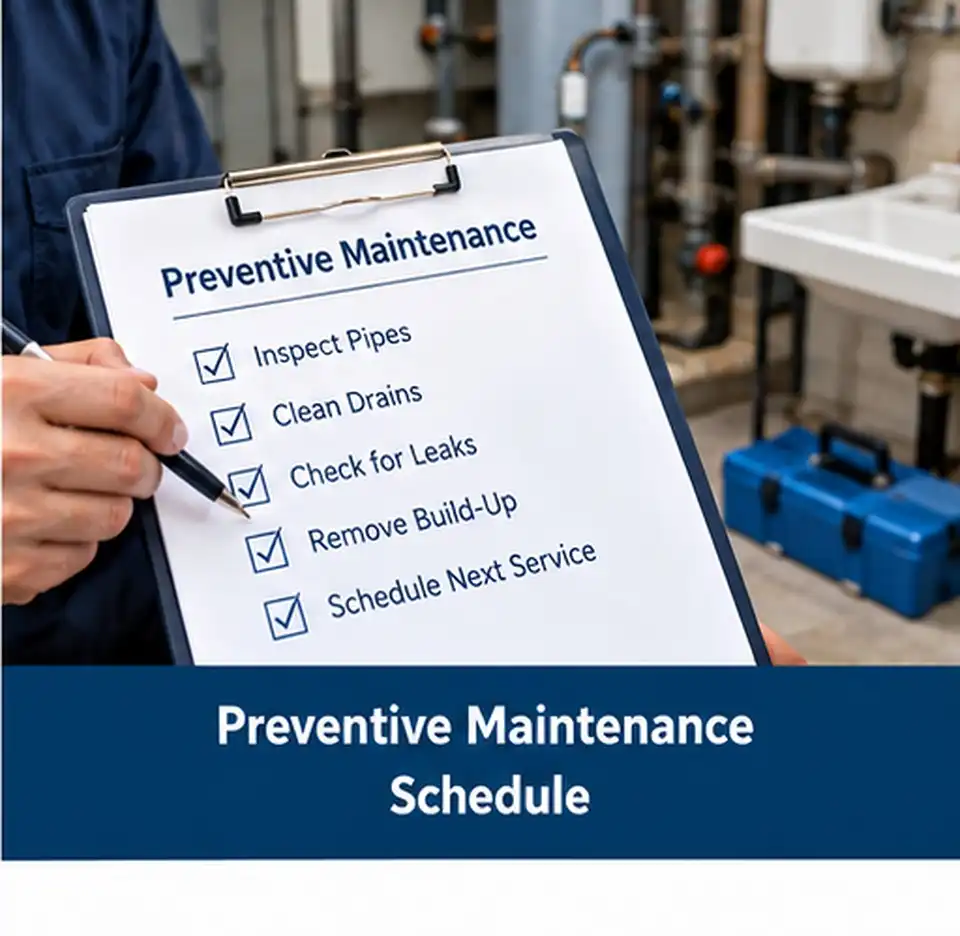
Preventive jetting costs less than emergency repairs. It removes buildup before it closes off a line. How often you need it depends on usage, pipe age, and clog history.
| Property Type | Recommended Jetting Frequency | Camera Inspection |
|---|---|---|
| Newer home, no clog history | As needed | Every 3–5 years |
| Older home (pre-1980) with cast iron or clay | Every 18–24 months | Every 1–2 years |
| Home with known root intrusion | Every 12–18 months | Annually |
| Busy household with heavy kitchen use | Every 12–24 months | Every 2 years |
| Multi-family building | Every 6–12 months | Annually |
| Restaurant or commercial kitchen | Every 3–6 months | Every 6–12 months |
| Office or retail space | Every 12–24 months | Every 2 years |
Pair professional jetting with smart daily habits. The EPA’s WaterSense home maintenance checklist is a solid reference for spotting leaks and keeping plumbing fixtures efficient. Small habits add up to fewer service calls.
Homeowner Maintenance Checklist
- Never pour grease, oil, or fat down the drain. Wipe pans and toss grease in the trash.
- Use drain strainers in kitchen sinks, tubs, and showers.
- Flush only toilet paper. “Flushable” wipes do not break down in sewer lines.
- Run hot water for 15–20 seconds after using the garbage disposal.
- Keep trees and large shrubs away from the sewer lateral path.
- Know your cleanout location and keep it accessible.
- Watch for early signs: gurgling, slow drains, and odors.
- Book a camera inspection if your home is more than 40 years old.
- Schedule jetting based on the frequency table above.
How to Prepare for a Hydro Jetting Visit
A little prep shortens the visit and keeps costs down.
- Clear the cleanout area. Move stored items, plants, or debris away from the access point.
- Note your symptoms. Write down which drains are slow and when problems started.
- Limit water use. Avoid laundry, dishwashers, and showers before the appointment.
- Secure pets and kids. Equipment and hoses run through the work area.
- Ask for camera footage. A good technician shows you the before and after.
- Request pricing upfront. Confirm the total before work begins.
FAQs
What is the difference between hydro jetting and drain cleaning?
Hydro jetting is one type of drain cleaning. Standard drain cleaning often means snaking, which opens a path through the clog. Jetting goes further by scouring the full pipe wall with high-pressure water.
How long does hydro jetting take?
Most residential jobs take one to three hours, including the camera inspection. Long lines, heavy roots, or commercial grease lines can take half a day or more.
Can hydro jetting damage my pipes?
Not when done correctly. A camera inspection identifies weak sections first. Technicians then adjust pressure for the pipe material and condition.
Will hydro jetting remove tree roots?
Yes. Specialized root-cutting nozzles slice through roots inside the line. Roots can regrow through cracked joints, so a follow-up inspection in 12 months is smart.
How often should I schedule hydro jetting?
Most homes benefit from jetting every 18–24 months if they have older pipes or a clog history. Restaurants often need it every 3–6 months. Check the maintenance table above for your property type.
Is hydro jetting worth the cost?
For recurring clogs, yes. Paying for snaking three times a year usually costs more than one jetting service. Most homeowners who book hydro jetting Chula Vista service after repeat clogs see far fewer calls afterward.
Do I need to be home during the service?
It helps. The technician may need indoor access to fixtures or a cleanout. You also get to see the camera footage and ask questions in person.
Is hydro jetting environmentally friendly?
Yes. It uses only water, with no chemicals entering the sewer system. It also avoids the corrosive runoff that chemical cleaners create.
Protect Your Pipes Before the Next Backup
Clean pipes prevent emergencies. Hydro jetting removes the grease, scale, and roots that snaking leaves behind, which means fewer clogs and lower long-term costs. The smart move is to act on early warning signs instead of waiting for sewage in the basement.
Whether you are comparing hydro jetting Chula Vista providers or protecting an older New Jersey home from another winter of stressed pipes, the steps are the same: inspect, jet, and maintain. At Bob’s Emergency Plumbing, our team explains every option in plain language and gives you the price before any work starts.
Explore our full range of residential plumbing services and book a camera inspection to find out exactly what is happening inside your lines.